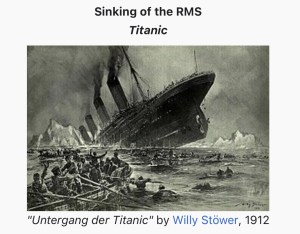
The Titanic sadly, but very famously sank, and there was no stopping it, with many people losing their lives! History.com says: “The luxury steamship RMS Titanic sank in the early hours of April 15, 1912, off the coast of Newfoundland in the North Atlantic after sideswiping an iceberg during its maiden voyage. Of the 2,240 passengers and crew on board, more than 1,500 lost their lives in the disaster. It has inspired countless books, articles and films, and her story has entered the public consciousness as a cautionary tale about the perils of human hubris.”
You might by now be wondering, why on earth I am referring to Dementia and the Titanic in the same blog?!
Well, as it’s Brain Health Awareness Month, I thought the analogy was useful.
Over the years, I have felt like nothing would every change in terms of attitudes towards improving lifestyle as a way of managing dementia positively, and the concept definitely felt like the Titanic, a sinking ship!
I’ve advocated for, and written or talked about reducing or modifying the cognitive decline caused by dementia, through lifestyle changes, including positive psychosocial and non pharmacological interventions for dementia.
Very slowly, attitudes are changing to this approach, so maybe the ship I have been on is not going to sink after all…
Kate Swaffer 2021
Finally, and yes, thankfully, evidence based research is also emerging to prove it is a valid way forward.
There are already hundreds of examples of anecdotal evidence of this approach working, as many DAI members can testify to. They are themselves, part of hundreds of cases of enecdotal evidence, which to date, noone has wanted to or even shown interest in researching.
The twice monthly DAI Brain Health meetings are one format where people with and without dementia are learning from each other, and sharing new evidence, case studies or examples of the advantages of eating a diet healthy for our brains, improving sleep, and exercising regularly, as well as interventions including many types of rehabilitation .
Together, I believe we are not letting the ‘tsunami of dementia’ as it is too often referred to, or the Titanic, sink.
Instead, we are helping to keep it afloat, and changing the direction of outcomes for people with dementia more positively, enabling increased well being and quality of life.
This approach may not be a cure, but it has and is providing more HOPE than any other approach, or rather, the lack of any other approach other than being advised to get our end of lives in order, and to prepare for the end.
The following two articles highlight two examples of the value of diet in managing dementia, so much so, that the Alzheimer’s Society UK had them on their website a couple of years ago.


There are also many many ways and people who have benefited from your work of which you will never know. So keep it up, Carry On!
LikeLike
Thank you my dear friend ❤️❤️❤️
LikeLike